


Blog
The Connection Between Posture, Disc Pressure, and Chronic Pain (and How to Fix It)

Whether you’re working long hours at a desk, spending time on your phone, or sitting behind the wheel, posture plays a powerful role in spinal health. Most people don’t realize that poor posture isn’t just cosmetic—it directly increases disc pressure, leading to nerve irritation, muscle fatigue, and eventually, chronic pain.
At Cleveland Disc Centers of America, Dr. Roger Huang and his team see posture-related pain every day. The good news? It’s not permanent. Through advanced spinal decompression therapy and corrective care, patients can reduce disc pressure, improve alignment, and live pain-free again—without surgery or medication.
How Posture Affects the Spine
The spine is designed to maintain a natural curve that balances the head and body evenly. When you slouch, lean forward, or hunch over a screen, those natural curves start to collapse. This misalignment increases pressure on the intervertebral discs—the soft cushions that act as shock absorbers between vertebrae.
When this pressure becomes chronic, it can lead to:
- Disc compression: The discs flatten and lose hydration, reducing their ability to protect the spine.
- Nerve irritation: Compressed discs push against nerve roots, causing pain, tingling, or numbness.
- Muscle imbalance: Some muscles tighten to compensate, while others weaken, pulling the spine even further out of alignment.
- Inflammation: Prolonged stress causes micro-injuries that lead to inflammation and stiffness.
Over time, this chain reaction contributes to conditions like degenerative disc disease, sciatica, and chronic neck or lower back pain. For many Cleveland patients, the first sign is stiffness—but the root cause runs much deeper.
Why Disc Pressure Leads to Chronic Pain
Think of your spinal discs like small, pressurized cushions filled with fluid. They rely on movement and proper posture to stay healthy and hydrated. When posture is poor, the weight of your body compresses these discs unevenly, forcing them to bulge or wear down over time. The added pressure disrupts blood flow and limits nutrient delivery—essentially starving the disc tissue.
Once a disc begins to lose height or hydration, nearby vertebrae move closer together. This reduces the space where nerves exit the spine, creating a pinching effect that leads to radiating pain, numbness, or weakness in the arms, legs, or back. Over time, even minor misalignments can result in major discomfort.
Modern Posture Habits and the Rise of “Tech Neck”
In today’s digital world, posture problems are more common than ever. On average, the human head weighs about 10–12 pounds. But when you tilt your head forward to look at a phone or computer screen, the effective weight on your neck increases dramatically—up to 60 pounds of pressure for every inch of forward tilt.
This repetitive strain, often called “tech neck”, causes the cervical spine (neck) to curve unnaturally, placing additional pressure on discs and surrounding tissues. It’s one of the leading causes of headaches, upper back pain, and even shoulder tension among Cleveland patients.
How Spinal Decompression Relieves Disc Pressure
Traditional posture correction exercises can help—but once discs are compressed, they need more than stretching to recover. That’s where spinal decompression therapy comes in.
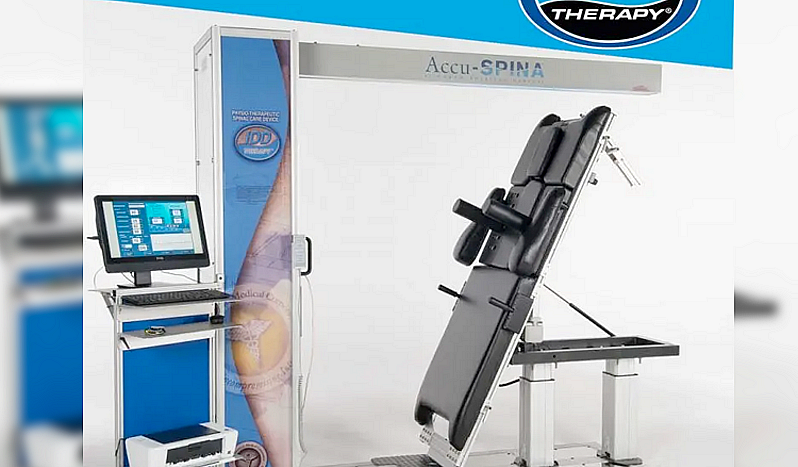
Using the advanced AccuSpina system, Dr. Huang delivers gentle, computer-controlled traction that stretches and releases the spine in precise cycles. This process creates negative intradiscal pressure, which draws oxygen, water, and nutrients back into the disc—helping it rehydrate and heal naturally.
As the discs regain height and flexibility, vertebrae separate, nerve pressure decreases, and inflammation subsides. The result? Less pain, improved posture, and better spinal balance.
How Decompression Complements Posture Correction
While decompression therapy targets the physical cause of disc pressure, posture training helps maintain the results long-term. Once the discs are decompressed and the spine moves more freely, it becomes much easier to retrain the body into healthier alignment.
Dr. Huang and his team often recommend complementary strategies alongside decompression, including:
- Ergonomic adjustments: Setting up your workspace to support proper posture, with screens at eye level and chairs that support the lower back.
- Core strengthening: Building core stability helps support spinal alignment throughout the day.
- Movement breaks: Standing, stretching, and walking every 30–60 minutes reduces spinal fatigue.
- Mindful awareness: Becoming conscious of your posture helps you catch slouching habits before they cause strain.
Together, these habits reinforce the healing achieved through decompression therapy, allowing patients to maintain lasting results.
Real Results for Cleveland Patients
Many patients at Cleveland Disc Centers of America come in with posture-related neck or lower back pain that has persisted for years. They’ve tried chiropractic care, massages, or stretching routines that bring only temporary relief. Once decompression is introduced, the difference is clear—pain decreases, mobility improves, and posture naturally realigns.
Patients often share feedback such as:
“After years of sitting at a desk, I didn’t realize how much my posture was affecting my back. Decompression helped me stand taller and move without pain again.”
“The neck pain I blamed on stress was actually from bad posture. Decompression made a bigger difference than anything else I tried.”
These stories highlight how powerful restoring proper disc function can be—not only for pain relief, but for overall comfort and confidence.
The Long-Term Benefits of Correcting Disc Pressure
When spinal discs are rehydrated and pressure is relieved, the benefits extend far beyond pain relief. Patients experience:
- Better flexibility: Freer motion in the neck and back without stiffness or restriction.
- Improved circulation: Enhanced blood flow delivers nutrients to spinal tissues for long-term health.
- Reduced inflammation: Decompression decreases tension in both muscles and nerves.
- More energy: Less pain means better posture, improved breathing, and reduced fatigue.
Over time, these changes help prevent degenerative conditions and make it easier to maintain healthy posture throughout life.
Why Cleveland Disc Centers of America
Led by Dr. Roger Huang, Cleveland Disc Centers of America provides personalized, non-surgical care focused on the root cause of pain. Using FDA-cleared AccuSpina technology, the team designs each decompression plan to match the patient’s exact spinal condition and goals.
- Customized decompression programs for disc and posture-related pain
- Comprehensive evaluations and imaging reviews
- Comfortable, relaxing treatment sessions with no downtime
- Ongoing education for posture, ergonomics, and spine maintenance
The clinic’s mission is simple: to help Cleveland residents restore balance, reduce pain, and live healthier, more active lives—naturally.
Fix the Cause, Not Just the Pain
Poor posture is more than a habit—it’s a mechanical problem that leads to disc damage and chronic pain over time. But with the right care, it can be reversed. Spinal decompression therapy restores proper spinal spacing, reduces nerve irritation, and allows the body to heal from the inside out.
Schedule your consultation today at Cleveland Disc Centers of America and learn how Dr. Huang can help you correct posture-related pain, restore spinal balance, and prevent future disc damage.
To explore more spine health resources and patient success stories, visit our blog.
‹ Back





 2794 Som Center Road