


Blog
Understanding Nerve Compression: Why Pain Radiates into Your Arms or Legs

Have you ever felt pain that starts in your lower back but shoots down your leg—or a dull ache in your neck that travels into your arm? These sensations are often caused by nerve compression, one of the most common reasons people experience radiating pain. This type of pain can be confusing and frustrating, but understanding what’s happening inside your spine is the first step toward finding real relief.
At Cleveland Disc Centers of America, Dr. Roger Huang specializes in helping patients overcome nerve compression naturally through advanced AccuSpina spinal decompression therapy. For many in Cleveland, this treatment has been the turning point—providing relief after months or even years of discomfort.
What Is Nerve Compression?
Nerve compression occurs when a spinal nerve root—the point where a nerve exits your spinal column—is pinched or irritated by surrounding structures. The most common culprits are herniated or bulging discs, bone spurs, or degenerative disc changes that reduce space within the spinal canal.
When a nerve is compressed, it disrupts the normal communication between your spine and body. That’s why the pain doesn’t always stay localized—it can travel along the path of the nerve, creating symptoms that appear far from the source of the problem.
Common Symptoms of Nerve Compression
Depending on where the compression occurs, symptoms can vary widely. In general, nerve compression may cause:
- Radiating pain down the arms, legs, or buttocks
- Numbness or tingling in the hands, feet, or fingers
- Weakness in the muscles connected to the affected nerve
- Shooting or burning pain that worsens with certain movements
- Reduced mobility or difficulty standing or walking for long periods
In the neck region, nerve compression typically causes symptoms in the shoulders, arms, and hands. In the lower back (lumbar spine), the pain often extends into the buttocks, legs, or feet—commonly known as sciatica.
How Spinal Discs Contribute to Nerve Compression
Your spinal discs act as cushions between vertebrae, absorbing shock and maintaining flexibility. When these discs become damaged—whether from age, injury, or prolonged sitting—their soft inner material can bulge outward or leak through a tear in the outer layer. This is known as a disc herniation.
When a disc bulges or herniates, it can press directly on nearby nerve roots, causing inflammation and pain that radiates along the nerve’s path. Over time, even mild compression can lead to chronic nerve irritation, numbness, or weakness if left untreated.
Why Radiating Pain Isn’t Just a Muscle Problem
It’s easy to assume that pain in the arms or legs comes from strained muscles, but nerve compression behaves differently. Unlike muscle soreness, nerve-related pain often feels sharp, burning, or electric. It may come and go depending on posture or activity level. You might also notice that simple actions—like bending forward or sitting—intensify your symptoms. That’s because these positions increase spinal pressure and further irritate the affected nerve.
Muscle treatments like massage or stretching can provide short-term comfort, but they don’t fix the underlying nerve compression. To truly stop radiating pain, pressure must be relieved at the spinal level.
How Spinal Decompression Relieves Nerve Pressure
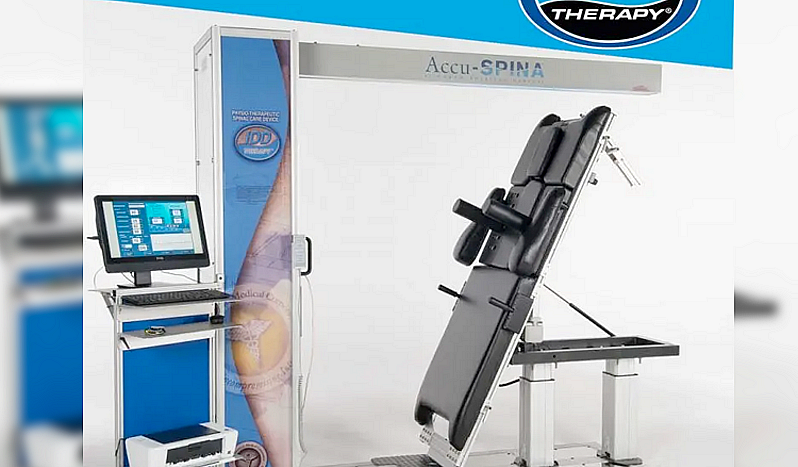
Spinal decompression therapy offers a targeted, non-surgical way to relieve nerve compression and restore proper disc function. Using the AccuSpina system, Dr. Huang performs precise, computer-controlled traction that gently separates the vertebrae. This process creates negative pressure inside the affected disc, allowing bulging or herniated material to retract and take pressure off the nerve.
As the pressure is released, inflammation decreases, blood flow improves, and the body can begin to heal naturally. Over time, many patients experience complete resolution of their radiating symptoms—without injections or surgery.
Benefits of Decompression for Nerve Pain
Patients undergoing spinal decompression at Cleveland Disc Centers of America often report:
- Significant reduction in radiating pain
- Restored feeling in numb or tingling limbs
- Improved flexibility and posture
- Less stiffness and easier movement
- Better sleep and energy due to reduced pain
Because decompression therapy treats the root cause—compressed nerves—it delivers results that last. Once the disc regains space and hydration, the nerve is free to function normally again.
Real Results for Cleveland Patients
Many Cleveland patients who come to Dr. Huang’s office have tried everything—medications, physical therapy, and even surgical consultations—with little relief. After beginning decompression therapy, they often notice improvements within the first few sessions.
One patient shared: “I had shooting pain down my right leg for months. After starting decompression, the pain began to fade after just two weeks. I can finally sit and stand without that burning feeling.”
Stories like these are common because decompression addresses what other treatments miss—the mechanical pressure inside the spine that keeps nerves inflamed and irritated.
Understanding the Science: How Decompression Heals
Each decompression session lasts about 30 minutes. During treatment, the spine cycles through gentle stretches and relaxations that mimic natural motion. Sensors in the AccuSpina system monitor your body’s response in real-time, ensuring consistent, comfortable traction without muscle guarding.
As negative pressure draws fluid and nutrients back into the disc, it promotes long-term healing. The result is a stronger, more hydrated disc that can once again cushion the spine and protect surrounding nerves.
Supporting Recovery Beyond Decompression
To maintain results and prevent future nerve compression, Dr. Huang may recommend lifestyle adjustments such as:
- Posture training: Sitting and standing correctly keeps spinal pressure evenly distributed.
- Stretching and core work: Gentle movement strengthens stabilizing muscles that protect the spine.
- Hydration and nutrition: Healthy discs depend on proper hydration and nutrient flow.
- Ergonomic improvements: Proper workstation setup helps prevent daily strain that contributes to nerve irritation.
These changes, combined with decompression, create a foundation for lasting spinal health.
When to See a Doctor About Radiating Pain
If you’re experiencing pain, tingling, or weakness that radiates into your arms or legs, don’t wait for it to go away on its own. Early evaluation is key to preventing permanent nerve damage. In many cases, non-surgical decompression therapy can help you recover faster and avoid invasive procedures altogether.
Find Relief from Nerve Pain Today
Radiating pain is your body’s way of signaling that something deeper is wrong. By addressing the root cause—nerve compression—you can finally get back to living without discomfort. Spinal decompression therapy offers a gentle, effective path to healing for patients across Cleveland.
Schedule your consultation today at Cleveland Disc Centers of America and find out if decompression can help relieve your nerve pain for good.
For more spinal health insights and patient success stories, visit our blog.
‹ Back





 2794 Som Center Road